

Hotel door hardware directly impacts guest experience, safety compliance, and long-term maintenance costs. Unlike residential applications, hotels face daily high-frequency use, strict fire codes, and multi-zone complexity. This guide covers a complete solution across three core areas.
Hardware Requirements by Zone
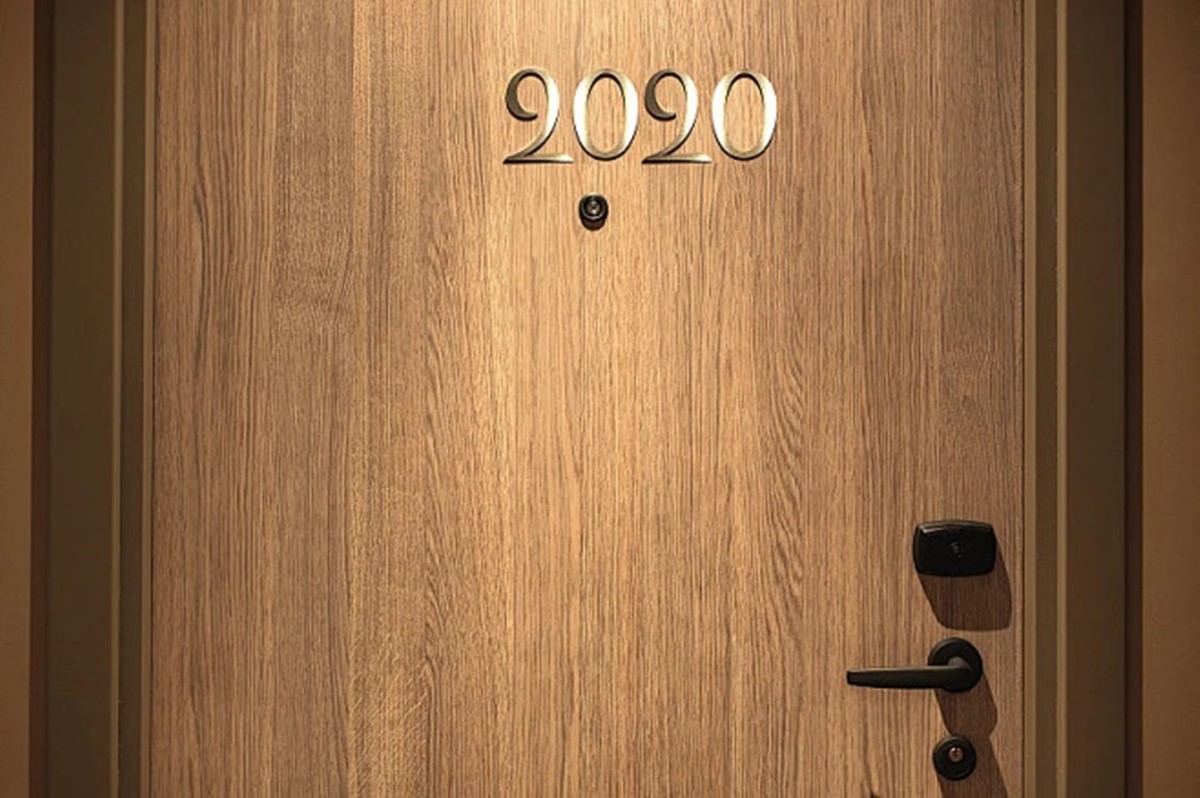
| Area | Door Handle Type | Lock Type | Hinge Type | Special Focus |
| Guest Room Entry | Lever handle (ADA) | Electronic key card lock | Heavy-duty hinge (Grade 1) | Security, durability, quiet operation |
| Guest Bathroom | Compact lever / pull | Privacy lock (emergency release) | Stainless steel hinge | Moisture resistance, space efficiency |
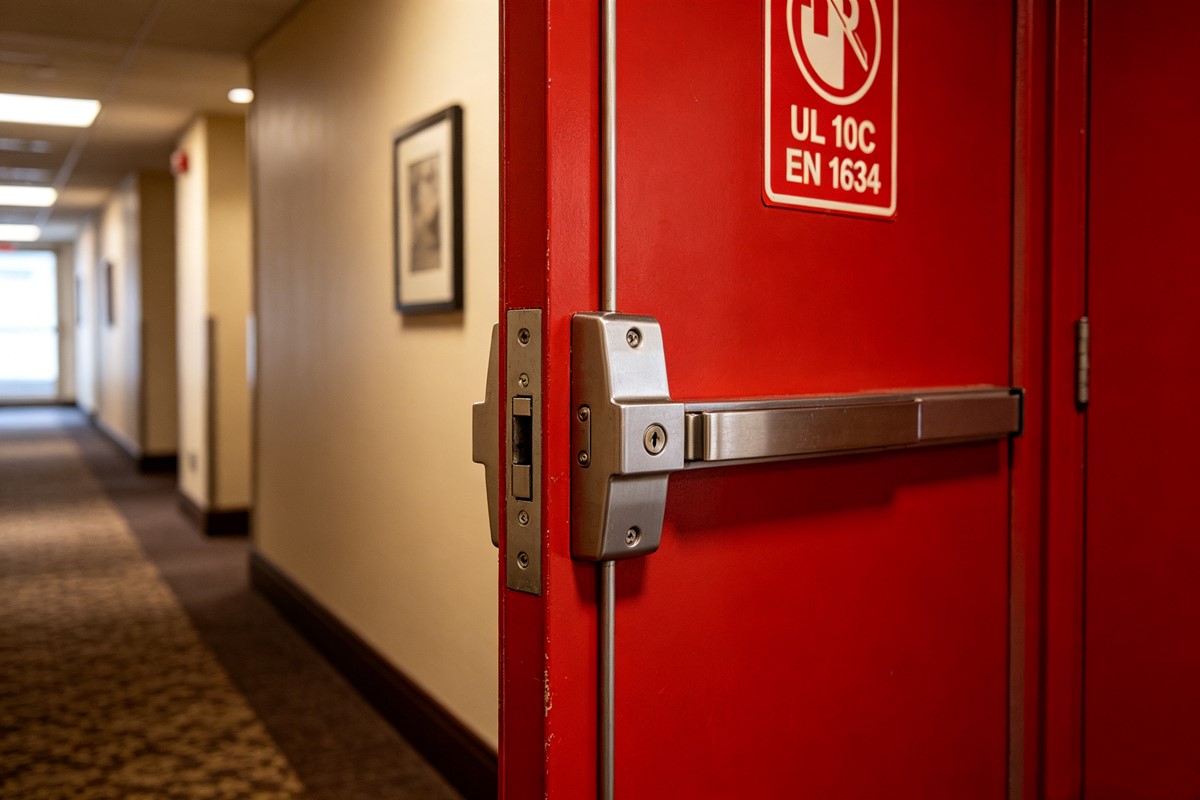
| Corridor / Fire Door | Lever handle | Fire-rated lock | Fire-rated hinge | UL 10C / EN 1634 compliance |
| Lobby / Public | Heavy-duty pull handle | Access control system | Heavy-duty hinge | High traffic, aesthetics |
| Back of House | Simplified lever | Basic lockset | Reinforced hinge | Cost control, reliability |
Performance Standards That Matter
ANSI/BHMA Grading: Grade 1 is the benchmark for hotels — tested for 1,000,000 cycles (locks) and 2,500,000 cycles (butt hinges), with 360 lb. force resistance. Grade 2 hardware suits lower-traffic areas but costs more in repairs over time.
EN Standards for International Projects: EN 1906 (door handles), EN 1935 (hinges), and EN 1634 (fire resistance) ensure consistency across Europe and many global markets.
UL 10C Fire Certification: Required for US hotel projects — certifies complete assemblies (door, frame, hinges, locks, seals) withstand fire for rated periods.- Corridor fire doors must self-close and latch every time; daily wear from luggage carts causes most inspection failures, not structural issues.
Material Selection for Hotel Environments
| Material | Key Property | Best Use |
| SUS304 Stainless Steel | Corrosion resistance, strength | Bathrooms, coastal hotels, high-traffic areas |
| 3# Zinc Alloy + Electroplating | Cost-effective, design flexibility | Interior guest rooms (dry conditions) |
| PVD Coating | Scratch resistance, color consistency | High-traffic lobbies, premium finishes |
Finish Coordination: Consistent finishes across all hardware create a unified brand identity — yalis’s in-house plating ensures “matte black” or “satin nickel” looks identical across handles, locks, and hinges.
Why Choose IISDOO (YALIS) for Hotel Projects
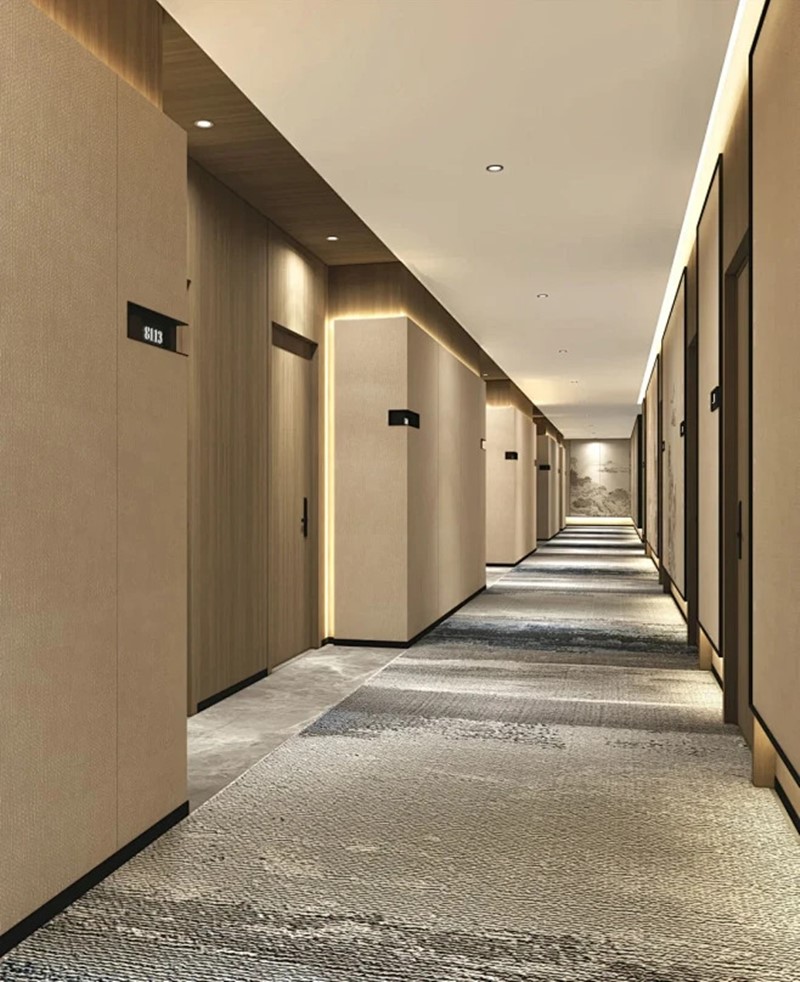
Based in Jiangmen, Guangdong, with 19 years of door hardware manufacturing experience, YALIS has invested in automatic polishing machines, CNC equipment, and die-casting machines since 2020, ensuring stable, controlled production. yalis offers:
ANSI Grade 1 heavy-duty hinges with 2,500,000-cycle rating
SUS304 stainless steel hardware passing 72+ hour salt spray tests
Complete door-type coverage: Wooden doors, aluminum-wood doors, slim-frame glass doors, and frameless glass hardware
Fire-rated options compliant with UL 10C and EN 1634 standards
FAQ
Q1: What‘s the difference between Grade 1 and Grade 2 door hardware?
A. Grade 1 is tested for 1,000,000+ cycles (360 lb. resistance), recommended for hotels. Grade 2 suits lower-traffic areas (400,000 cycles).
Q2: What material is best for hotel bathroom hardware?
A. SUS304 stainless steel offers the best corrosion resistance for high-humidity environments. yalis’s bathroom hardware passes 72+ hour salt spray tests.
Q3: Does corridor fire door hardware need special certification?
A. Yes. The entire door assembly must be UL 10C (US) or EN 1634 (EU) certified.
Q4: Can I get a consistent finish across all hotel zones from one supplier?
A. Yes — yalis’s in-house plating ensures identical “matte black” or “satin nickel” across guest rooms, bathrooms, and service areas.
Q5: Is yalis’s hardware suitable for international hotel projects?
A. Yes — UL 10C, EN 1634, EN 1906, and EN 1935 compliant. Products are third-party validated.
Post time: Jun-18-2026